The Interview Escape Hatch: How Celebrities Are Using 'Exhaustion' and 'Prior Commitments' to Dodge the Questions They Don't Want Answered
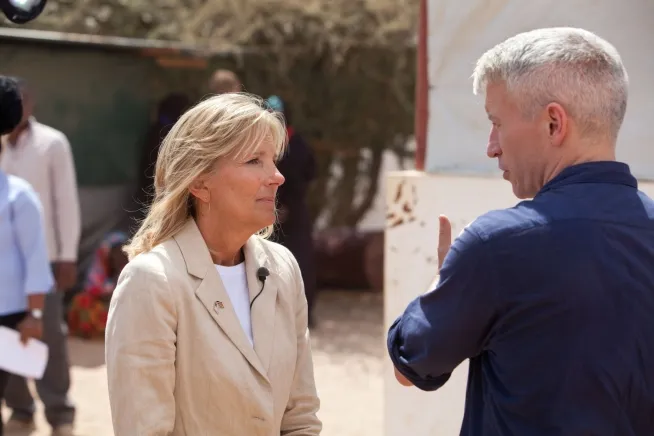
Photo: David Lienemann, Public domain, via Wikimedia Commons
The Interview Escape Hatch: How Celebrities Are Using 'Exhaustion' and 'Prior Commitments' to Dodge the Questions They Don't Want Answered
When a celebrity suddenly can't make it to that highly anticipated late-night appearance or pulls out of a major magazine profile hours before deadline, there's usually more to the story than "scheduling conflicts." Welcome to Hollywood's newest survival strategy: the strategic cancellation.
In an era where every interview could become a viral moment for all the wrong reasons, A-listers are increasingly deploying a sophisticated playbook of last-minute exits that would make Houdini jealous. The excuses range from the classic "exhaustion" to the vague "prior family commitment," but the timing tells the real story.
The Anatomy of an Avoidance Strategy
The pattern is becoming unmistakable. A celebrity books a press tour months in advance, then suddenly develops "laryngitis" the day after their ex releases a tell-all memoir. Or they discover an "urgent family matter" hours before sitting down with a journalist known for asking about those pesky lawsuit rumors.
Take the recent wave of cancellations surrounding award season. Multiple sources in entertainment journalism report a sharp uptick in stars pulling out of interviews scheduled during periods when their personal lives are generating headlines. The excuses are getting more creative, but the strategy remains the same: control the narrative by controlling access.
"It's become an epidemic," says one veteran entertainment reporter who requested anonymity. "Publicists used to work with us to navigate sensitive topics. Now they just yank their clients entirely and hope the story dies down."
The Cost of Credibility
But this strategy comes with hidden costs that extend far beyond disappointed journalists and rescheduled photo shoots. When celebrities repeatedly cancel at the last minute, they're essentially training the media and public to read between the lines of every future "prior commitment."
The entertainment industry runs on relationships, and burned bridges with major outlets can have long-term consequences. Publications remember which stars are reliable and which ones treat their editorial calendar like a suggestion. This reputation follows celebrities through career transitions, comeback attempts, and crucial promotional periods.
Moreover, the pattern creates its own story. When a star consistently cancels interviews during controversial periods, the absence becomes more telling than their presence might have been. Social media users have become expert code-breakers, immediately connecting dots between cancellation announcements and whatever scandal is trending.
The Publicist's Dilemma
Behind every strategic cancellation is a publicist walking a tightrope between protecting their client and maintaining industry relationships. Sources close to several major PR firms reveal the internal tension these situations create.
"You're damned if you do, damned if you don't," explains one publicist who has handled crisis communications for multiple A-list clients. "Send your client into an interview unprepared for tough questions, and you could have a career-ending moment. Cancel too often, and you lose access to the platforms that build careers."
The most sophisticated PR teams are now employing what industry insiders call "controlled availability" – strategically limiting interview opportunities to friendly outlets and pre-approved topics, rather than risking the chaos of open-ended conversations.
When Excuses Backfire
Not all escape hatches lead to safety. Recent high-profile cancellation controversies have shown how quickly a protective strategy can become a PR nightmare of its own.
When excuses don't align with publicly available information – like claiming exhaustion while simultaneously posting vacation content, or citing family emergencies during very public social events – the coverup often generates more negative attention than the original issue.
Social media has made these contradictions impossible to hide. Fan accounts track celebrity movements with forensic precision, and inconsistencies between official statements and observable behavior become memes within hours.
The New Rules of Engagement
Smart celebrities and their teams are evolving beyond simple avoidance tactics. The most successful approach now involves strategic timing and selective engagement rather than wholesale cancellation.
Some stars are opting for controlled environments – podcast appearances with friendly hosts, social media statements that can't be edited, or charity events where tough questions would be inappropriate. Others are getting ahead of stories by addressing controversies on their own terms before the interview circuit begins.
Reading the Signs
For media watchers, certain phrases have become reliable indicators of strategic avoidance:
- "Due to exhaustion" (translation: avoiding scandal questions)
- "Unexpected family matter" (translation: legal team advised silence)
- "Scheduling conflict" (translation: story broke after booking)
- "Doctor's orders" (translation: crisis management in progress)
The more elaborate the excuse, the more likely it's covering something significant.
What's Next?
As audiences become more sophisticated at reading these signals, the effectiveness of traditional excuses is diminishing. The next evolution in celebrity crisis management may involve more transparency rather than less – acknowledging when legal or personal situations prevent certain discussions, rather than manufacturing cover stories.
Ultimately, the interview escape hatch reveals a fundamental shift in how celebrity operates in the digital age. In a world where every word can become a headline and every gesture a meme, sometimes the smartest thing a star can say is nothing at all – they just need a really good excuse for their silence.