The Ick That Broke the Camel's Back: Why Fans Suddenly Stop Forgiving Their Favorite Stars — and Who's Next on the List
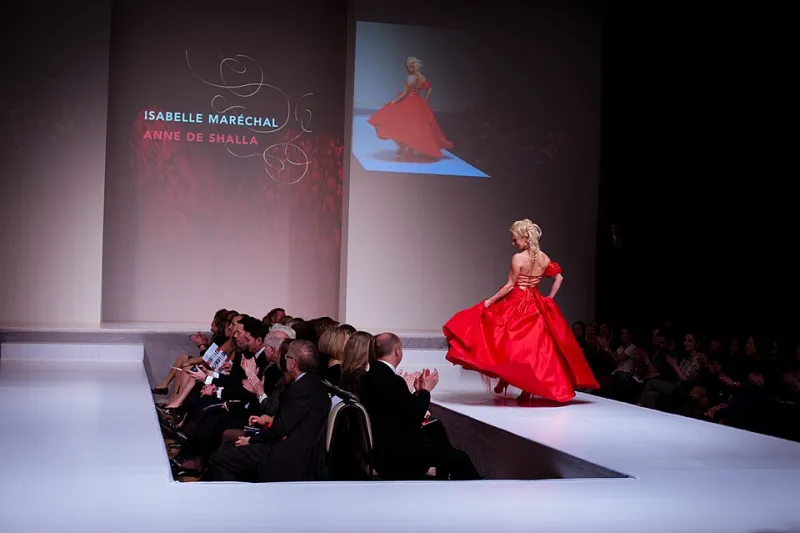
Photo: Jason Hargrove from New York, CC BY 2.0, via Wikimedia Commons
The Ick That Broke the Camel's Back: Why Fans Suddenly Stop Forgiving Their Favorite Stars — and Who's Next on the List
It never happens all at once. That's the thing about a celebrity losing the room — it almost never looks like a single catastrophic event. It looks like a Tuesday. A mildly annoying interview clip, a quote that lands wrong, a vibe that's been quietly building for months, and then suddenly the whole internet turns around and says actually, I'm done. The behavior didn't change. The audience did. And the star usually doesn't see it coming until it's already over.
This is the ick. Not the scandal, not the arrest, not the public meltdown — but the slow-burn accumulation of habits, patterns, and personality quirks that fans tolerated, then rationalized, then quietly resented, until one day they just... stopped.
How the Ick Actually Works
The psychology here is worth unpacking, because it's genuinely counterintuitive. You'd think that the more egregious the behavior, the faster the audience would turn. But that's not how it works in practice. Major scandals often unite a fanbase in defense of a star — the wagons circle, the narrative becomes about persecution, and loyalty spikes in the short term.
The ick works differently. It's the small stuff. The pattern of behavior that individually seems excusable — a slightly condescending interview answer, a habit of talking over people, a recurring tendency to make their own struggles the center of every conversation — but collectively starts to calcify into a portrait that's hard to unsee.
Cultural critics have noted that the ick moment often coincides not with the behavior getting worse, but with the audience's tolerance getting thinner. What changed isn't the celebrity — it's the cultural context around them. The joke that was edgy in 2015 lands as offensive in 2025. The "relatable" rich person bit that seemed charming during one era reads as tone-deaf during an economic squeeze. The behavior is static; the lens shifts.
The Case Files: Stars Who Lost the Room
Consider Ellen DeGeneres, whose daytime queen persona was essentially bulletproof for years. The jokes about being "nice" were always there in the background — former employees had raised concerns that circulated in industry circles long before they went mainstream. But it wasn't until a specific cultural moment in 2020, when the bar for institutional accountability rose sharply, that those same concerns went from industry gossip to front-page news. The behavior hadn't dramatically escalated. The audience's willingness to compartmentalize it had simply expired.
Or look at the arc of Armie Hammer, whose career seemed insulated by charm and good looks through a series of red flags that, in retrospect, were hiding in plain sight — uncomfortable interviews, ex-partners speaking out, a pattern of behavior that was documented and largely ignored. The ick built quietly for years before the dam broke entirely.
More recently, the discourse around certain music and film stars has followed a similar trajectory — fans on social media documenting the moment they realized a behavior they'd always excused had finally become impossible to ignore. TikTok has become the primary arena for this, with videos titled things like "the moment I realized [celebrity] was actually insufferable" racking up millions of views. The format itself has become a genre.
The Anatomy of a Ticking Ick Bomb
So what are the warning signs? Based on patterns that have played out repeatedly, a few markers tend to predict a celebrity who's sitting on an ick time bomb.
The Relatability Overcorrection. Stars who work very hard to seem down-to-earth often overcorrect in ways that start to feel performative — and audiences, who are more media-literate than ever, are increasingly allergic to the performance of authenticity. When a celebrity with a nine-figure net worth talks about their Trader Joe's haul for the fifth interview in a row, the goodwill starts to curdle.
The Victimhood Monopoly. There's a specific type of celebrity who has a gift for making every conversation — including ones about other people's struggles — circle back to their own. Fans tolerate this for a while, especially when the celebrity is genuinely talented. But there's a ceiling, and when the audience starts noticing the pattern, it's very hard to un-notice.
The Punching-Down Habit. A single edgy joke can be forgiven. A pattern of them — particularly when directed at people with less power or platform — tends to compound quietly until it hits a tipping point. The cumulative receipt is always worse than any individual entry.
The Selective Accountability. Celebrities who issue very public apologies for some behaviors while conspicuously never addressing others create a credibility gap that fans eventually clock. The apology that feels carefully curated rather than genuinely contrite tends to accelerate the ick rather than defuse it.
Who's Currently Sitting in the Danger Zone?
Without naming names in ways that veer into speculation, it's fair to say that the current cultural climate has a particularly short fuse for a few specific archetypes. Stars who built their brand on a "tell it like it is" persona are finding that the same frankness that charmed audiences five years ago now reads as punching down or lacking self-awareness. Stars who've been very public about their personal growth while continuing patterns that contradict that narrative are accumulating quiet receipts. And stars who've leaned heavily into parasocial intimacy — the "I'm just like you" energy — are especially vulnerable, because the gap between the performance and the reality hits harder when the audience felt personally close to them.
The Point of No Return
The truly fascinating thing about the celebrity ick is that it's almost never reversible in the short term. Unlike a scandal, which can be addressed directly, the ick is a vibe — and you can't issue a press release about a vibe. The stars who successfully recover from it tend to do so by going quiet long enough for the cultural context to shift again, then re-emerging in a context that reframes who they are.
The ones who don't recover tend to be the ones who respond to the ick by doubling down — more of the behavior that caused it, delivered with the energy of someone who genuinely doesn't understand why the room has changed.
Spoiler: the room always knows when you don't get it.
And right now, somewhere out there, a celebrity is giving an interview, saying something they've said a hundred times before — and for the first time, the audience is tilting its head and thinking: wait, actually...
Tick tock.